
Research Theme Seven
Informal Economy & Formalisation
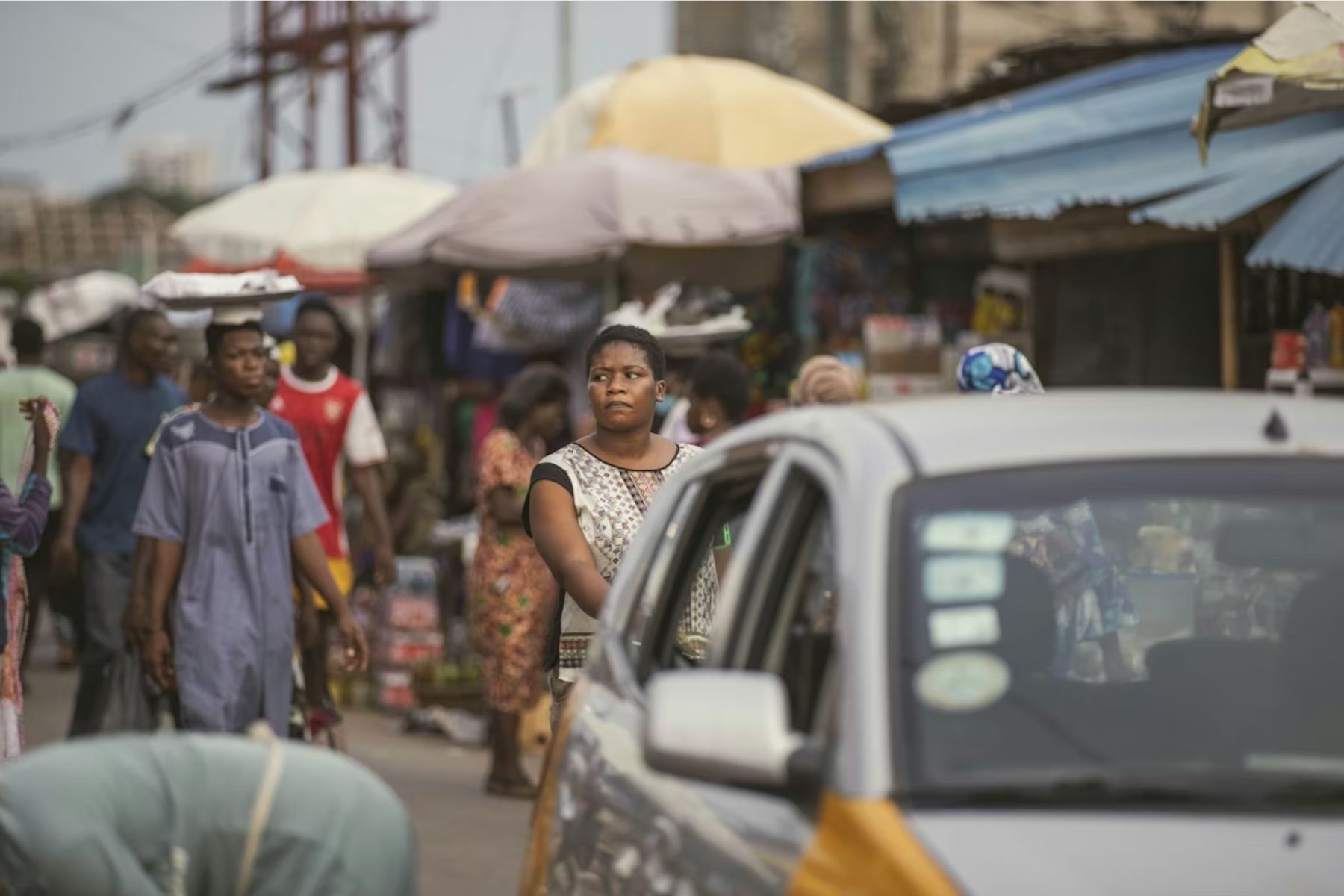
Where Most People Work
In sub-Saharan Africa, 85.8% of employment is informal, according to the ILO. In Southern Africa, the figure is broadly similar — and rising. In Malawi, more than 90% of the workforce is estimated to be outside the formal economy. In Zimbabwe, decades of economic crisis have pushed even previously formal workers into informality. In South Africa — the region’s most industrialised economy — informal employment accounts for roughly a third of the workforce and is growing as formal job creation stagnates.
The informal economy is not a marginal footnote to Southern Africa’s economies. It is its foundation. Street traders, domestic workers, home-based producers, seasonal farm workers, construction day labourers, waste pickers, and cross-border traders are all part of a vast, diverse, and largely invisible world of work that sustains millions of families and contributes substantially to GDP — in some SADC countries, more than 50% of it.
Yet despite its scale, the informal economy remains systematically excluded from the policy frameworks, legal protections, and social services that workers in formal employment take for granted. No contracts. No sick leave. No pension contributions. No union protection. No OSH coverage. And in many cities, active harassment by authorities who view informal workers as a problem to be managed rather than citizens to be served.
COVID-19 and the Shock of Exclusion
The COVID-19 pandemic made the costs of informality starkly visible. When lockdowns were imposed across Southern Africa in 2020, informal workers had nowhere to turn. The ILO estimated that four in five informal workers lost their primary source of income within days of restrictions being put in place. Formal workers could claim social insurance, access sick pay, or receive employer-funded support. Informal workers had nothing — except the prospect of hunger.
Government responses in most SADC countries were slow and inadequate for the informal sector. South Africa’s COVID-19 Social Relief of Distress grant — quickly rolled out to reach millions of previously uncovered workers — was a partial exception, and it demonstrated both the possibility and the political will for extending social protection more broadly. The debate it sparked about a Basic Income Grant has not gone away.
The pandemic exposed the formalisation deficit — the failure of decades of economic development to extend the protections of formal employment to the majority of the workforce — as a public health, economic, and social crisis, not merely a labour market technicality.
The Formalisation Challenge
ILO Recommendation 204 on the Transition from the Informal to the Formal Economy, adopted in 2015, provides the global framework for formalisation. It emphasises that formalisation must be gradual, incentive-based, and rights-respecting — not a punitive crackdown on informal workers. Most SADC governments have developed national formalisation strategies in the years since, though implementation has been slow and contested.
The barriers to formalisation are real and significant. Registration processes are complex and costly. Tax systems are not designed for small and micro enterprises. Labour regulations often impose compliance costs that are unmanageable for informal businesses. For workers rather than enterprises, the barriers are different: many cannot access formal employment even if they want to, because formal jobs are simply not available.
Formalisation is also a political question. Street traders in Harare, Lusaka, and Johannesburg have been subjected to violent evictions by city authorities conducting ‘clean-up’ operations. These operations — framed as urban management — in fact destroy livelihoods and violate rights. Organisations like StreetNet International and WIEGO (Women in Informal Employment: Globalizing and Organizing) have documented the pattern and pushed back with advocacy and litigation.
Organising and Advocacy
Informal workers are organising. In South Africa, domestic workers’ unions have won landmark legal protections including the Domestic Workers’ Sectoral Determination and inclusion in the UIF (Unemployment Insurance Fund). In Malawi, the Malawi Union for the Informal Economy has worked to build collective voice among informal traders and piece-rate workers. Across the region, waste picker organisations have won recognition from municipalities and inclusion in waste management systems.
These gains are fragile and often partial. But they demonstrate that formalisation — understood not as forcing workers into systems designed for someone else, but as extending rights and protections to where workers actually are — is both possible and worth fighting for.
What We Do
- Map informal employment patterns across SADC countries, including sectors, demographics, and geographic distribution.
- Research the barriers to formalisation for workers, informal enterprises, and specific sectors such as domestic work and street trading.
- Assess national and regional formalisation strategies and evaluate their effectiveness and equity impacts.
- Investigate the links between informality, poverty, gender inequality, and social exclusion.
- Support trade unions and workers’ organisations to organise and represent workers in the informal economy.
- Produce evidence to support advocacy for extending social protection, labour rights, and OSH coverage to informal workers.
Why work with us
Research grounded in context. Built for impact.
Academically rigorous
Several of our researchers hold PhDs and publish in peer-reviewed journals. Our work meets the standards expected by international funders, UN agencies, and academic partners.
Deep regional knowledge
Our researchers live and work across five Southern African countries. We understand the social, economic, and political contexts in which our partners operate — not from a distance, but from the ground up.
Inclusive by design
We centre the voices of marginalised groups in all our work — including persons with disabilities, women, migrant workers, and informal economy workers. Inclusion is not an add-on. It shapes every research question we ask.
We build your capacity, not just our own
Every project is an opportunity to strengthen your team’s research and M&E skills. We transfer knowledge, share tools freely, and treat every partner as a collaborator — not just a client.